
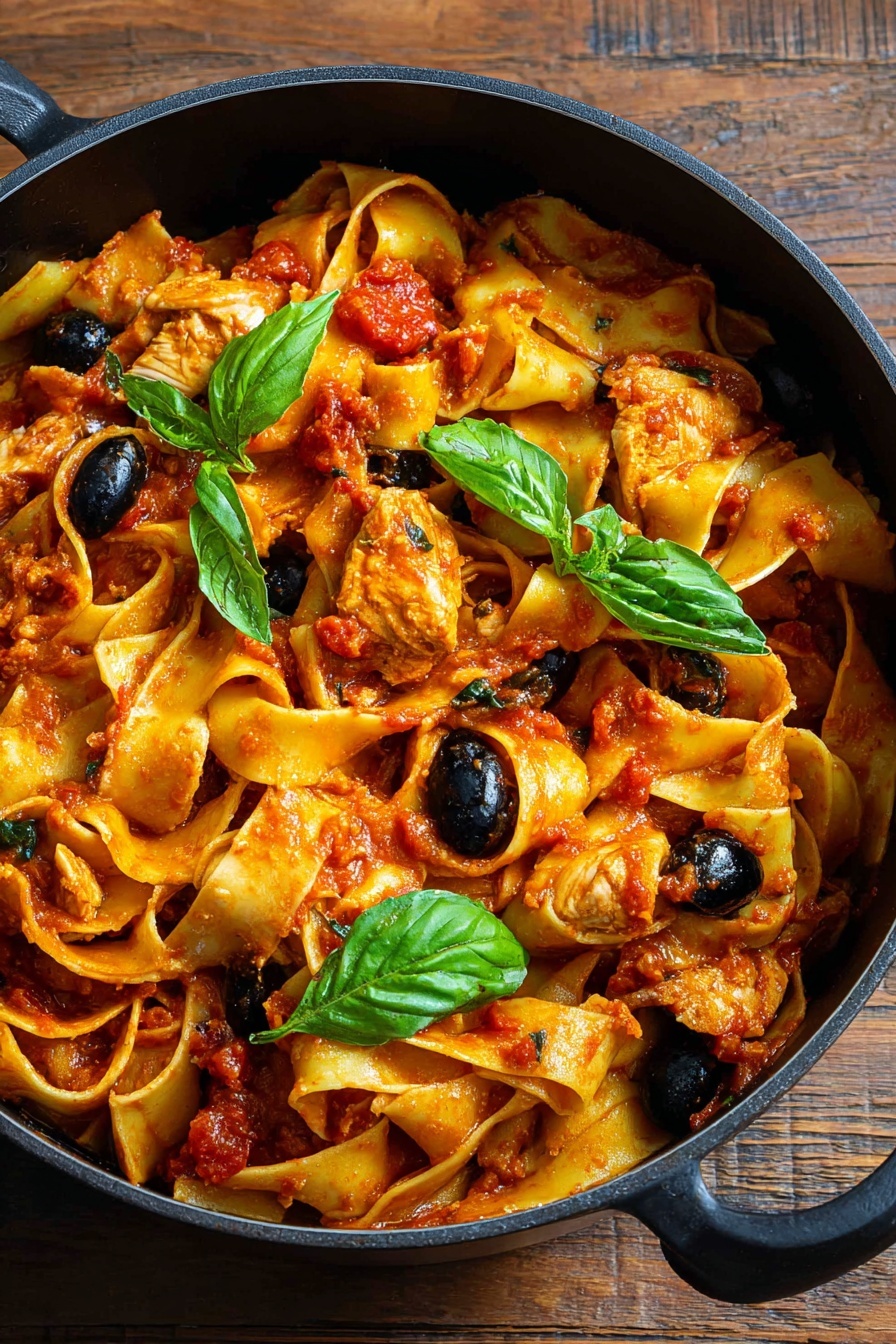
If you’re looking for a dish that hits all the right notes — rich, comforting, and packed with bold flavors — then I’m super excited to share this Chicken Cacciatore Pasta Recipe with you. Trust me, once you try it, you’ll see why my family and I keep coming back for seconds. It’s that perfect blend of tender chicken thighs, tangy tomato sauce, and briny olives tossed with silky pappardelle. Let’s dive in and get cooking!
Why You’ll Love This Recipe
- Tender, Flavorful Chicken: Braising the thighs slowly lets them soak up all those beautiful tomato, pepper, and olive flavors to melt in your mouth.
- Perfect Pasta Pairing: The wide pappardelle noodles are just right to catch the chunky sauce, making every bite satisfying.
- Balanced Richness: Butter, olive oil, and a splash of dry white wine work together to create a sauce that’s luxurious but never heavy.
- Make-Ahead Friendly: This Chicken Cacciatore Pasta Recipe keeps well, so you can prep in advance or enjoy delicious leftovers.

Ingredients You’ll Need
This recipe uses everyday ingredients that come together to create something extraordinary. When shopping, I recommend getting good quality chicken thighs and fresh herbs for the best flavor.
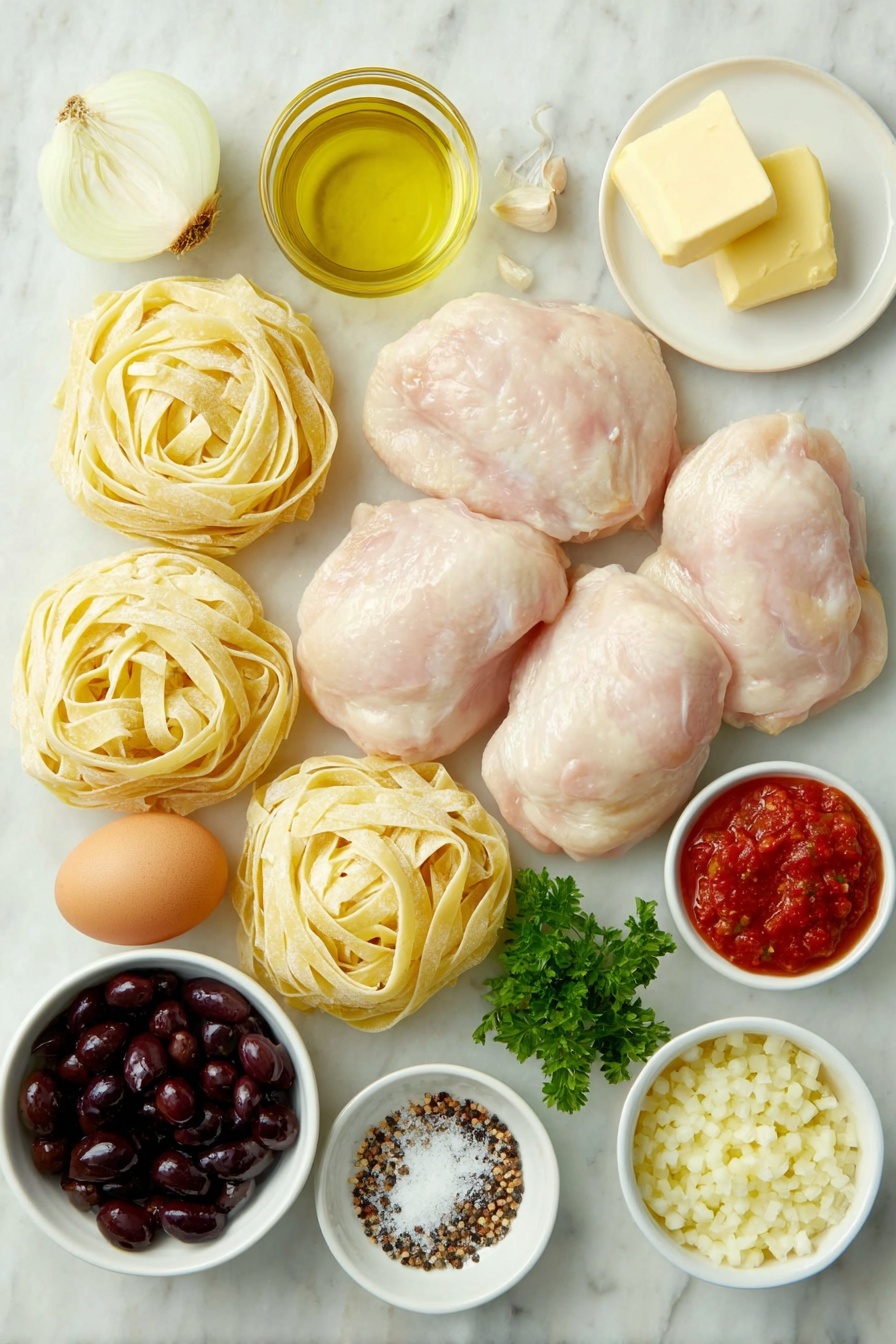
- Pappardelle: Wide, flat noodles that hold on to the sauce beautifully.
- Boneless skinless chicken thighs: Juicy and forgiving in cooking, they stay tender and absorb all the flavors.
- Olive oil: Use extra virgin for the best taste in sautéing.
- Butter: Adds richness; divided butter helps in stages to build layers of flavor.
- Onion: Sliced — for sweetness and depth in the sauce.
- Red bell pepper: Adds brightness and a subtle sweetness.
- Garlic: Minced fresh garlic brightens the whole dish.
- Tomato paste: Intensifies the tomato flavor — don’t skip this step!
- Plum tomatoes: Hand crushed or lightly pulsed for a chunky, rustic tomato sauce.
- Dry white wine: A splash lifts the sauce with acidity and complexity.
- Low-sodium chicken stock: Adds savoriness without overpowering.
- Black oil-cured olives: Rinsed and chopped, they bring a salty punch that balances the sauce.
- Capers: Rinsed to tone down their brine; these add a lovely tangy note.
- Salt and pepper: Season to taste but be mindful as the olives and capers add saltiness.
- Flat-leaf Italian parsley: Fresh and minced for garnish and a vibrant pop of color.
Variations
This Chicken Cacciatore Pasta Recipe is pretty versatile, and I love playing around with it depending on what I have on hand or my mood. Feel free to make it your own!
- Use chicken breasts: I’ve tried swapping thighs for breasts for a leaner version—just watch the cooking time so it doesn’t dry out.
- Add mushrooms: Sautéed cremini or button mushrooms make a fantastic earthy addition to the sauce.
- Spice it up: A pinch of red pepper flakes gives it a nice kick if you like a little heat.
- Gluten-free pasta: I’ve had success using chickpea or brown rice pappardelle to keep it gluten-free with great texture.
How to Make Chicken Cacciatore Pasta Recipe
Step 1: Sear the Chicken to Golden Perfection
First things first: dry those chicken thighs really well with paper towels — this helps them sear beautifully without steaming. Season them generously with salt and pepper. Heat olive oil in a large saucepan or Dutch oven over medium-high heat, then add a tablespoon of butter for richness. Add the chicken in batches, making sure not to crowd the pan, and sear each piece for about 3-4 minutes per side until they develop a deep golden crust. Once done, set them aside on a plate and sprinkle a little more salt on top. This step creates all the wonderful browned bits that flavor your sauce later — it’s worth the extra effort!
Step 2: Sauté the Aromatics and Build the Base
Turn the heat down to medium, add the remaining butter, sliced onions, and red bell peppers to the pan. Stir occasionally and cook until they soften and become sweet — about 7 to 10 minutes. Then toss in the minced garlic and cook for 2 more minutes, just until fragrant. Keep an eye on the garlic so it doesn’t burn, which can make the sauce taste bitter.
Step 3: Intensify with Tomato Paste and Deglaze
Now add the tomato paste to the pan and cook it down for about 5 minutes, stirring frequently. If it starts to stick or burn, splash in a bit of water to loosen it up. This step is where the umami builds, giving the sauce that rich, concentrated tomato flavor. Next, pour in the dry white wine and chicken stock, turning the heat up so the liquid boils. Use a wooden spoon to scrape all those golden brown bits off the bottom — this is flavor gold right here. Let the liquid reduce by half to concentrate all those delicious tastes.
Step 4: Simmer with Tomatoes and Chicken
Once reduced, add the hand-crushed plum tomatoes and return the chicken thighs to the pan. Give everything a good stir, then lower the heat to a gentle simmer. Cover partially and let it cook low and slow for 30 to 40 minutes until the chicken is incredibly tender and the sauce has thickened. Resist the urge to rush this step — the longer simmer helps all the flavors marry beautifully.
Step 5: Cook Pasta and Finish with Capers, Olives, and Parsley
While your sauce is simmering, bring a large pot of salted water to a boil (I add 2 tablespoons salt per gallon — this seasons the pasta perfectly). Cook the pappardelle for about 1 minute less than the package suggests to keep it al dente. Just before your pasta finishes, remove the chicken to a plate and tent with foil to stay warm. Stir the rinsed capers and chopped olives into the sauce. Drain the pasta, then add it directly to the sauce, tossing well to coat. If it seems thick, add reserved pasta water a splash at a time to loosen up the sauce. Cook for just another minute or so until the noodles are perfectly tender. Finish with minced parsley, then taste and adjust salt and pepper. Serve with the chicken on top (or alongside if you prefer) and don’t forget freshly grated Parmesan—trust me, it’s the best finishing touch.
Pro Tips for Making Chicken Cacciatore Pasta Recipe
- Dry Chicken Thoroughly: This helps create that beautiful sear you want for maximum flavor and texture.
- Don’t Rush the Simmer: Slow cooking breaks down the chicken nicely and deepens the sauce’s flavor.
- Reserve Pasta Water: It’s magic for loosening your sauce without watering down the flavor.
- Watch Salt Levels: Olives and capers are salty, so taste before adding more salt at the end.
How to Serve Chicken Cacciatore Pasta Recipe
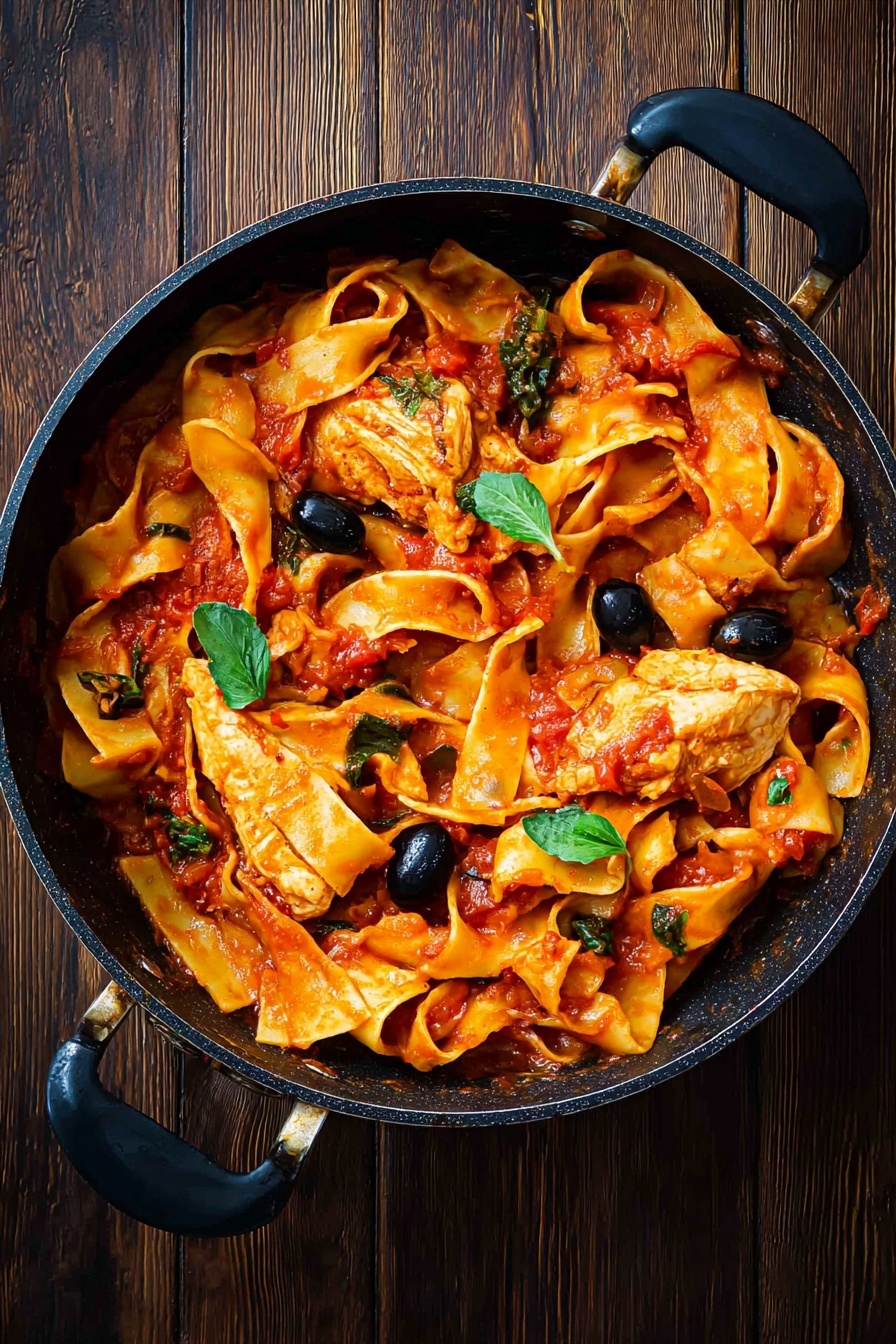
Garnishes
I always finish this dish with a generous sprinkle of fresh flat-leaf Italian parsley — it adds a wonderful fresh note and color contrast. A little freshly grated Parmesan cheese on top? Absolutely essential for that salty, cheesy richness that balances the tangy, robust sauce.
Side Dishes
My go-to sides are simple and let this hearty pasta shine. A crisp Caesar salad or some roasted garlic bread works beautifully here, helping to soak up every last bit of that sauce. Sometimes I add a side of sautéed greens like spinach or broccoli rabe for a slightly bitter contrast.
Creative Ways to Present
For special occasions, I like to serve this in wide shallow bowls with the chicken thighs elegantly arranged on top of the pappardelle. A drizzle of good extra virgin olive oil finishes the plate. You can even sprinkle a few extra capers and olives around to emphasize those salty bursts of flavor. It’s simple, rustic, but looks like a restaurant-quality dish.
Make Ahead and Storage
Storing Leftovers
I store leftovers in an airtight container in the fridge for up to 3 days. The flavors actually deepen overnight, making for even better leftovers. Just be sure to cool the dish completely before refrigerating.
Freezing
This recipe freezes beautifully. I usually freeze the sauce with chicken in a leak-proof container or freezer bag. When ready to eat, thaw overnight in the fridge, cook the pasta fresh, and toss everything together. This keeps the pasta texture much better than freezing it already mixed.
Reheating
Reheat on low to medium heat on the stove with a splash of water or chicken stock to loosen the sauce if needed. Stir gently to keep the chicken tender and the sauce silky. Avoid microwaving if you can—it tends to dry out the chicken.
FAQs
-
Can I use chicken breasts instead of thighs for this Chicken Cacciatore Pasta Recipe?
Yes, you can substitute chicken breasts, but keep in mind they tend to cook faster and can dry out if overcooked. I recommend reducing the simmer time and checking for doneness earlier to ensure juicy results.
-
What pasta works best with Chicken Cacciatore Pasta Recipe?
Pappardelle is ideal because the wide noodles hold the chunky sauce beautifully, but you could also use fettuccine or rigatoni if that’s what you have on hand. The key is choosing a pasta that can catch all those delicious pieces of chicken and veggies.
-
Can I make this Chicken Cacciatore Pasta Recipe ahead of time?
Absolutely! The sauce actually tastes better the next day as the flavors meld. Just store the sauce and pasta separately and combine when reheating to keep the pasta from getting mushy.
-
What if I don’t have white wine on hand?
No worries! You can substitute extra chicken stock or a mix of chicken stock and a splash of white wine vinegar to add some acidity, but keep it light so it doesn’t overpower the sauce’s natural flavors.
Final Thoughts
I absolutely love how this Chicken Cacciatore Pasta Recipe turns out every single time — it’s rustic yet refined, comforting yet fresh. When I first made it for my family, they went crazy for how tender and flavorful the chicken was and how the sauce perfectly coated the pappardelle. It’s become one of our go-to recipes when I want to impress without fuss. I hope you try it soon and make it a regular in your dinner rotation; you won’t regret it!
Print
Chicken Cacciatore Pasta Recipe
- Prep Time: 15 minutes
- Cook Time: 60 minutes
- Total Time: 75 minutes
- Yield: 6 servings
- Category: Main Course
- Method: Stovetop
- Cuisine: Italian
Description
Chicken Cacciatore Pasta is a hearty Italian dish that features tender braised chicken thighs simmered in a rich tomato, pepper, olive, and caper sauce, served over wide pappardelle noodles. This comforting meal balances savory flavors with the robustness of olives and capers, making it perfect for a satisfying family dinner.
Ingredients
Pasta
- 1 pound pappardelle
Chicken and Sauce
- 2 pounds boneless skinless chicken thighs
- 2 tablespoons olive oil
- 4 tablespoons butter (cubed, divided)
- 1 large onion (sliced)
- 1 large red bell pepper (sliced)
- 6 cloves garlic (minced)
- 3 ounces tomato paste
- 28 ounce can plum tomatoes (hand crushed or blender pulsed)
- 3/4 cup dry white wine
- 1 cup low-sodium chicken stock
- 3/4 cup black oil-cured olives (rinsed, pitted, and chopped)
- 3 tablespoons capers (rinsed)
- salt and pepper (to taste)
- 1/4 cup flat-leaf Italian parsley (minced)
- 1 cup reserved pasta water (optional, for loosening sauce)
Instructions
- Searing the Chicken: Heat a large saucepan or Dutch oven over medium-high heat with olive oil. Pat the chicken thighs dry with paper towels and season all sides with salt and pepper. Add chicken and 1 tablespoon butter to the pan, searing each piece for 3-4 minutes per side until well browned. Work in batches, adding butter for each batch to avoid crowding. Transfer seared chicken to a plate and sprinkle lightly with salt.
- Sautéing Vegetables: Reduce heat to medium, add remaining butter, sliced bell peppers, and onions to the pan. Sauté until soft, about 7-10 minutes. Add minced garlic and cook for an additional 2 minutes, stirring regularly to prevent burning.
- Cooking Tomato Paste: Stir in tomato paste and add a splash of water if it begins to stick or burn. Cook the paste for 5 minutes, stirring frequently to develop deep flavor.
- Deglazing and Simmering Sauce: Pour in white wine and chicken stock, increase heat to high and bring to a boil. Scrape the bottom of the pan to release browned bits. Reduce liquid by half, then add crushed plum tomatoes and return chicken pieces to the pan. Stir well and bring sauce to a gentle simmer.
- Braising the Chicken: Maintain a low simmer and cook until chicken is very tender, about 30-40 minutes. Season the sauce with salt cautiously, as the olives and capers will add saltiness later.
- Cooking Pasta: While the sauce simmers, bring a large pot of salted water to a boil (using 2 tablespoons salt per gallon). Cook pappardelle until just 1 minute shy of al dente.
- Finishing Sauce and Pasta: Remove chicken to a plate and cover with foil to keep warm. Add capers and chopped olives to the sauce, stirring to combine. Add cooked pasta to the sauce and toss to coat, adding reserved pasta water if needed to loosen the sauce. Cook together just until pasta reaches al dente. Remove pan from heat and adjust seasoning with salt and pepper. Stir in minced parsley.
- Serving: Plate the pasta and serve chicken on top or alongside. Garnish with grated Parmesan cheese if desired. Serve immediately and enjoy.
Notes
- Chicken cacciatore pasta combines tender braised chicken thighs with pappardelle pasta in a flavorful tomato, pepper, olive, and caper sauce.
- Searing the chicken in batches helps develop a rich flavor and prevents overcrowding, ensuring proper browning.
- Adjust salt seasoning carefully because the olives and capers contribute significant saltiness.
- If sauce thickens too much, reserved pasta water can be added to loosen it up.
- Serve with freshly grated Parmesan cheese for added richness.
Nutrition
- Serving Size: 1 serving
- Calories: 685
- Sugar: 10.9 g
- Sodium: 204 mg
- Fat: 18.6 g
- Saturated Fat: 7.1 g
- Unsaturated Fat: 11.5 g
- Trans Fat: 0 g
- Carbohydrates: 67.8 g
- Fiber: 5 g
- Protein: 56.2 g
- Cholesterol: 137 mg